Create a Wallet
Understand accounts, recovery and what you control before creating or importing a wallet.
Open guide →
A multi-chain wallet, blockchain network and Web3 knowledge hub from imtoken
Explore multi-chain assets, choose the right network, send and receive with clearer checks, connect to DApps, review approvals and build a stronger understanding of wallet security. imtoken brings product guidance and blockchain knowledge into one structured learning path.
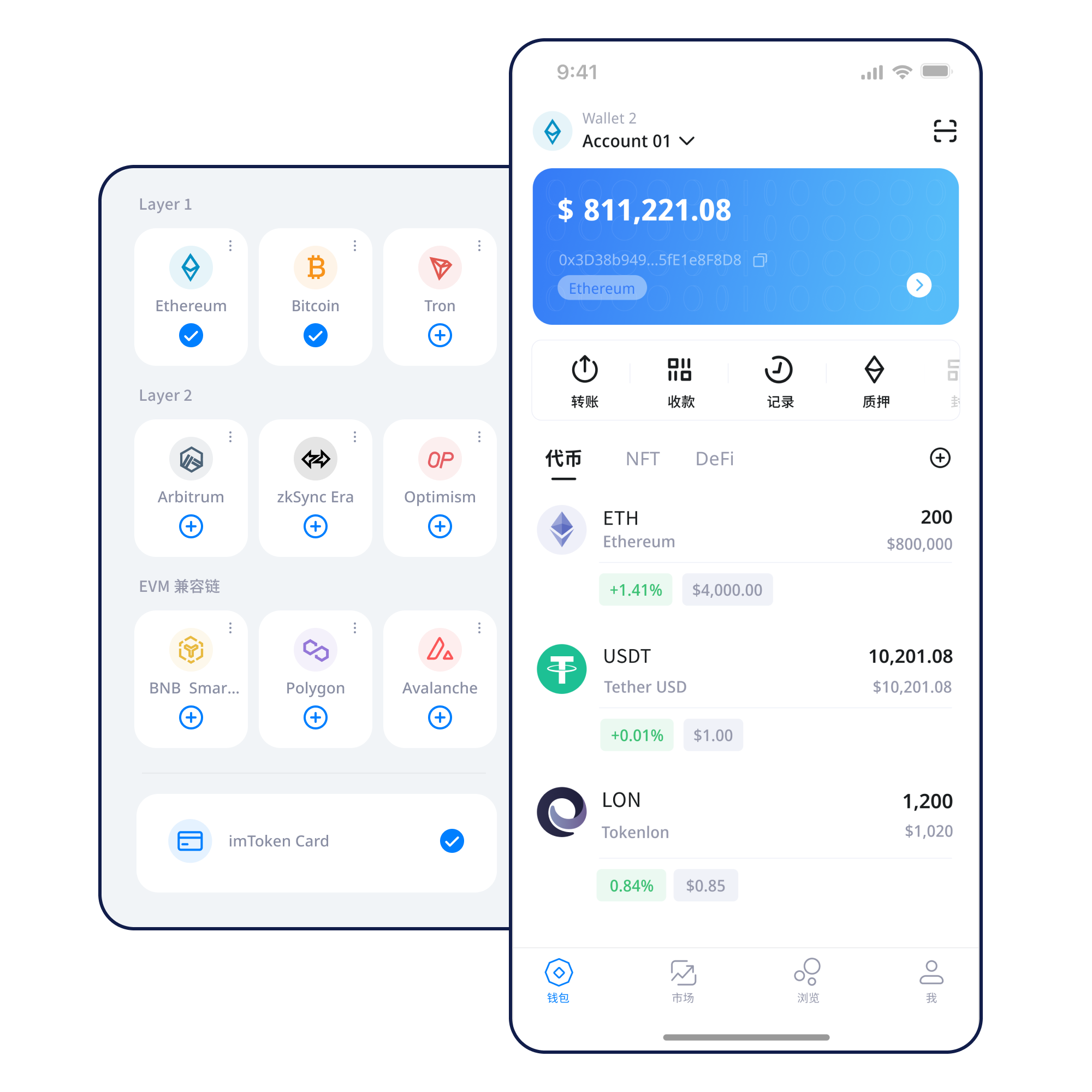
Five common wallet actions organized as practical entry points, with the next check made clear at each step.
Understand accounts, recovery and what you control before creating or importing a wallet.
Open guide →Keep recovery information offline and verify that your backup can be used without exposing it.
Open guide →Confirm the receiving address and the exact network the sender will use before funds are sent.
Open guide →Re-check destination, network, amount and gas before signing a transaction.
Open guide →Verify the domain, connect the intended account, and inspect every signature or approval separately.
Open guide →Assets, networks, transactions, browser connections and recovery security should be understood together.
Compare networks, verify addresses and read confirmation state before assuming assets move automatically between chains.
Learn more →
Use the mobile wallet to view assets, switch networks, review transaction history and access DApps while keeping device security in mind.
Learn more →
Receiving requires the right address and network; sending adds amount, gas and transaction-hash checks.
Learn more →Browser connections make DApp access convenient, but every signature and approval remains a separate decision.
Learn more →Protect seed phrases and private keys offline, review approvals, and check transaction details before signing.
Learn more →
Switch topics without hiding the underlying content from users who browse without scripting.
Different chains maintain separate states. Always verify the asset's network before receiving, sending or bridging.
Read the guide →
Nodes propagate and verify transactions, blocks record state transitions, and confirmations reflect how deeply a transaction is included.
Read the guide →
EVM-compatible networks share contract concepts, but gas assets, network IDs and contract deployments remain network-specific.
Read the guide →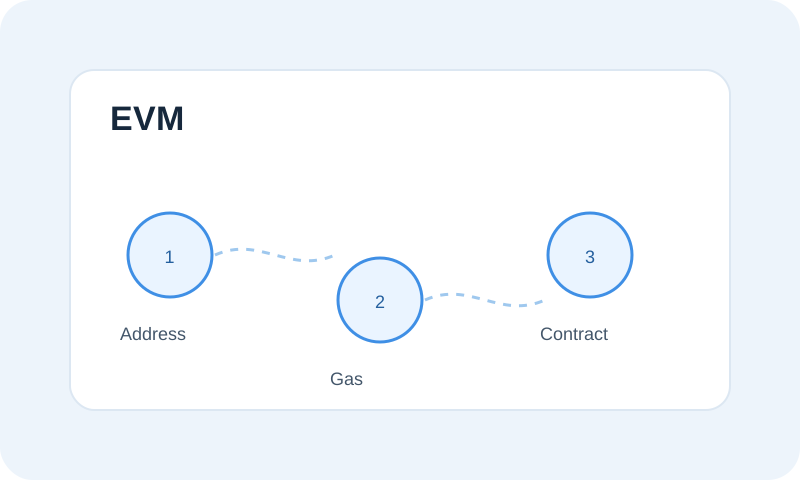
Layer 2 can reduce execution pressure on a base layer, while deposits, withdrawals and bridges may involve separate confirmation periods.
Read the guide →
Fees vary with network rules and congestion. A successful submission is not the same as final confirmation.
Read the guide →Read network fees together with execution status and block confirmations.
Each step adds context before the next action can affect assets or permissions.
Use the official download entry and keep the installation source clear.
Understand whether you are creating a new recovery set or importing an existing one.
Record recovery information offline and never send it to another person.
Match the asset, recipient and active network before continuing.
Check address, amount, gas and the exact action before signing.
Save transaction hashes and review permissions you no longer need.
Connecting a wallet does not mean you should approve every later signature. Verify the site, account, requested action and permission scope each time.
Wallet security is not a single setting. It is a chain of decisions: keeping recovery secrets offline, resisting phishing and fake support, reviewing DApp requests, controlling device exposure, and checking every transfer. imtoken will never ask for your seed phrase, private key or verification code. A wallet cannot unilaterally reverse an on-chain transaction, so prevention and verification matter more than promises of recovery.
Open Security Center →Editorial guides connect addresses, recovery, networks, gas, transaction hashes, DApps and approvals.
A wallet is an interface to blockchain accounts, not a bank account. Learn how addresses identify destinations, how seed phrases and private keys control recovery and signing, how networks separate asset state, why gas exists, how a transaction hash helps verification, and why DApp signatures and approvals deserve separate checks.
Read the full guide →Learn the protocol concepts before considering any staking action.
Ethereum PoS uses validators to participate in consensus. Rewards depend on protocol and network conditions, while withdrawals and exits follow network-defined mechanisms and may involve waiting periods.
Learn staking concepts →Validator penalties, smart contract risk, service fees, waiting periods, third-party service risk and digital-asset price volatility can all affect outcomes.
Understand validators →Product explanations, network reminders, security guidance and service information are presented with the action context users need.
Product explanations are organized around user tasks rather than feature claims.
Similar address formats can exist on different networks; always verify the network context.
Never send seed phrases, private keys or verification codes to any person or website.
Rewards, waiting periods, penalties and price movements can all vary.
Clear answers about wallets, networks, DApps and security.
A digital wallet manages blockchain accounts, addresses and signing authority. Assets are recorded on their respective networks; the wallet helps you view state and prepare signatures or transactions.
A seed phrase can restore a wallet's account structure, while a private key controls signing for a specific account. Both are highly sensitive and should remain offline and private.
If you have no other valid backup, a wallet generally cannot recreate your seed phrase or private key for you. A tested offline backup should be created when the wallet is set up.
Similar address formats can exist across multiple networks, but the asset network and the recipient's supported network must match. A network mismatch can make recovery difficult or impossible.
Gas is the network fee mechanism used to execute transactions and smart contract operations. Cost varies with network rules, transaction complexity and congestion.
A transaction hash is an identifier that can be used in a blockchain explorer to inspect status, block inclusion, sender, recipient and related contract information.
Check the active network, save the transaction hash and inspect the explorer status before submitting the same action again. Handling differs by network and by the current on-chain state.
Use the unified download entry. Never share recovery secrets during installation or setup.